Quick summary: Call recording is one of the most valuable and most misunderstood features in a business phone system. For Irish businesses, it serves four distinct purposes — quality and training, compliance, dispute resolution, and AI transcription. Dromlik, a cloud phone system for Irish businesses, includes call recording as standard on all plans, with EU-hosted storage, role-based access controls, and optional AI transcription. Plans start from €12/user/month (annual billing). This guide covers what call recording does, what Irish businesses are legally required to do when they record calls, and how to get the most from it.
What Call Recording Actually Does
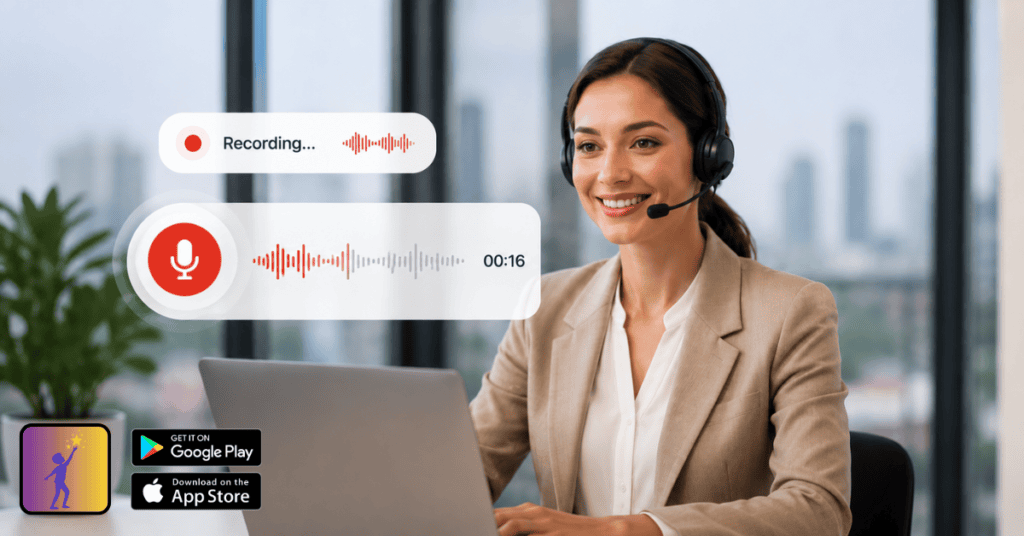
Call recording captures every inbound and outbound call as an audio file, stored accessibly in your phone system’s dashboard. On Dromlik, recordings are:
- Available immediately after a call ends
- Searchable by date, time, agent, number, or duration
- Downloadable as audio files
- Linked automatically to the relevant CRM contact or activity when CRM integration is enabled
- Stored within the EU as standard
Basic call recording — a log of every call with a playback link — is included on all Dromlik plans. A recording storage upgrade (from 500 minutes to 10,000 minutes) is available at +€40/month system-wide. AI transcription, which converts recordings into searchable text summaries, is available at +€20/month system-wide on the Orbit plan.
The Four Reasons Irish Businesses Use Call Recording
1. Quality and Training
The most common use case, and the one with the most immediate operational impact. Listening to how your team handles calls — how they respond to objections, how they explain your service, how they handle complaints — is the most direct route to improving customer communication.
For new team members, call recordings replace the need for a supervisor to sit in on calls. A library of well-handled calls becomes a training resource. Poorly handled calls become coaching opportunities. Patterns that would otherwise be invisible — a particular question that always catches agents off-guard, a product explanation that consistently confuses customers — become visible and fixable.
For Irish businesses in sales, support, or any role where call quality directly affects outcomes, this is the feature that pays for itself fastest.
2. Compliance
For certain Irish business sectors, call recording isn’t optional — it’s a regulatory requirement.
Financial services. Irish firms operating under Central Bank of Ireland authorisation, and those subject to MiFID II, are required to record and retain relevant communications including telephone conversations where investment advice is given or transactions are executed. Retention periods vary but are typically five to seven years.
Insurance. Regulated insurance intermediaries under the Consumer Insurance Contracts Act have obligations around documenting the basis for advice given — call recordings provide an accurate, contemporaneous record.
Legal. While not universally mandated, Irish solicitors and legal firms increasingly use call recording as part of file management — a record of instructions given, advice provided, and client consent obtained.
Healthcare. Calls involving patient consultation, appointment booking with clinical details, or treatment discussion may be recorded for clinical governance purposes, with appropriate GDPR handling.
Irish financial services firms subject to MiFID II are required to record telephone conversations relating to client orders and transactions. Failure to maintain these records — and to make them available to the Central Bank within 72 hours of request — carries significant regulatory risk.
3. Dispute Resolution
When a customer disputes what was agreed on a call — a quoted price, a delivery commitment, a product specification, a service scope — a recording resolves it quickly and accurately. Without a recording, disputes become a credibility contest between two parties’ recollections. With a recording, the facts are available immediately.
For Irish trades businesses (what was quoted and what was agreed), professional services firms (what advice was given and what instructions were received), and any business where verbal commitments form part of a commercial relationship, this is the case that justifies call recording on its own.
4. AI Transcription and Call Intelligence
The most recent development — and the one that changes what call recording is capable of. AI transcription converts every call recording into a searchable text transcript, with an AI-generated summary of key points, commitments made, and next steps.
This transforms call recording from a passive archive into an active operational tool:
- A manager can review 50 call summaries in the time it would take to listen to five recordings
- Key phrases, competitor mentions, pricing objections, or compliance keywords can be flagged automatically
- Call summaries log directly to CRM activities — no manual note-taking, no reconstruction from memory
- Follow-ups are captured and visible before the next call begins
Available on Dromlik’s Orbit plan at +€20/month system-wide.
Call Recording and GDPR: What Irish Businesses Need to Know
Recording customer calls involves processing personal data — and in some cases, special category data. GDPR applies, and Irish businesses need to handle call recording lawfully.
Legal Basis for Recording
There are several lawful bases under GDPR that Irish businesses typically rely on for call recording:
Legitimate interests — the most commonly used basis for business call recording. Your business has a legitimate interest in recording calls for quality, training, and dispute resolution purposes, provided this interest is balanced against the caller’s reasonable expectations.
Legal obligation — for regulated businesses (financial services, insurance) where call recording is required by law or regulation.
Contract performance — where the recording is necessary to fulfil a contractual obligation.
Informing Callers
Under GDPR, callers must be informed that their call may be recorded before the recording begins. In practice, this is done through an IVR announcement at the start of the call — “This call may be recorded for training and quality purposes” — which satisfies the transparency requirement.
This notice should be:
- Given before any personal data is discussed
- Clear and plain — not buried in terms and conditions the caller hasn’t read
- Accurate — if you say “may be recorded,” all calls should be recorded or the language should be “is recorded”
Storage and Access
Recordings are personal data and must be handled accordingly:
- Storage location — recordings must be stored within the EU for Irish businesses. Dromlik stores all recordings on EU-based infrastructure as standard. US-hosted providers require additional data transfer safeguards.
- Access controls — only authorised staff should be able to access recordings. Dromlik’s role-based access controls let you limit who can play, download, or delete recordings.
- Retention periods — recordings should not be kept longer than necessary. Define retention periods based on your business purpose — 90 days for general quality purposes, up to 7 years for regulated financial services calls.
- Subject access requests — a customer or employee can request a copy of recordings involving them under GDPR Article 15. Your system should be capable of searching and retrieving relevant recordings promptly.
A call recording that captures a customer’s personal data — their name, their account details, their health information — must be stored within the EU for Irish businesses operating under GDPR. US-hosted providers are not straightforwardly compliant without additional safeguards that most Irish SMBs are not equipped to negotiate.
Employee Call Recording
Recording calls made by employees is subject to additional considerations. Employees should be informed that their calls are recorded, typically through an employment contract clause or a communications policy. The purpose of recording — training, quality, compliance — should be clearly stated. Access to recordings for HR purposes (disciplinary proceedings, grievances) should follow fair procedures.
Call Recording for Specific Irish Business Types
Financial Services and Insurance
The most heavily regulated environment for call recording in Ireland. Central Bank-authorised firms and MiFID II-regulated entities must record relevant calls, retain them for defined periods, and make them available to the regulator on request. Dromlik’s call recording with EU-hosted storage, role-based access, and configurable retention periods provides the infrastructure for compliance.
For Irish financial services firms, the recording upgrade (€40/month system-wide for 10,000 minutes) and AI transcription (€20/month) are both particularly valuable — transcription allows keyword search across thousands of recordings, surfacing compliance-relevant content without manual review.
Legal Practices
Irish solicitors increasingly use call recording as part of file management — capturing client instructions, advice given, and consent obtained. Recordings stored against the relevant matter file provide an accurate, contemporaneous record that protects both the firm and the client.
Trades and Construction
For Irish trades businesses — plumbers, electricians, builders, roofers — call recording resolves the most common commercial disputes: what was quoted, what scope was agreed, what start date was confirmed. A 2-minute recording is faster and more accurate than any written note.
Medical and Healthcare
Calls involving patient information are special category data under GDPR. Recording these calls requires a clear legal basis, appropriate access controls, defined retention periods, and EU-hosted storage. For GP practices, clinics, and healthcare providers, Dromlik’s EU-hosted recording with role-based access provides the correct foundation.
Customer Support Teams
For Irish businesses with dedicated support functions, call recording combined with AI transcription enables quality review at scale — supervisors can review summaries of 100 calls in the time it would take to listen to 10, identify patterns in customer issues, and coach agents based on actual call content rather than anecdotal feedback.
How Call Recording Works in Dromlik
Call recording on Dromlik is automatic — no agent needs to start or stop a recording, no call is missed. Every inbound and outbound call is captured from the moment it connects.
Accessing recordings: From the Dromlik dashboard, recordings are searchable by date range, agent, phone number, call direction (inbound/outbound), and duration. Each recording has a playback link and a download option.
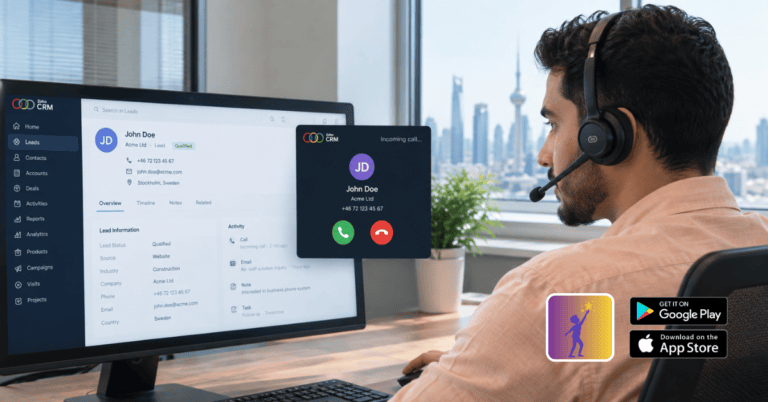
CRM logging: When CRM integration is enabled (Orbit plan), the recording link attaches automatically to the relevant contact activity in HubSpot, Salesforce, Zoho, or Zendesk. No manual linking required.
AI transcription: On the Orbit plan with the AI transcription upgrade, every recording is automatically transcribed with a summary. Transcripts are searchable and attached to the call log.
Access controls: User roles in Dromlik determine who can access, play, download, or delete recordings. Supervisors and managers typically have full access; agents may have access to their own calls only.
Retention: Recording retention is configurable. Define the period after which recordings are automatically deleted, based on your business purpose and regulatory requirements.
Pricing
| Nucleus | Orbit | |
|---|---|---|
| Monthly billing | €15/user/month | €27/user/month |
| Annual billing | €12/user/month | €22/user/month |
| Call recording | ✓ Included (500 mins storage) | ✓ Included (500 mins storage) |
| Recording upgrade | +€40/month system-wide | +€40/month system-wide |
| AI transcription | ✗ | +€20/month system-wide |
| CRM integration | ✗ | ✓ Included |
Recording upgrade: 500 → 10,000 minutes of storage, system-wide. AI transcription: up to 500 mins/month of transcription, system-wide.
See the full pricing breakdown.
Get call recording set up for your Irish business
Talk to the Dromlik team about your call recording requirements — compliance, training, dispute resolution, or AI transcription. Free 7-day trial, no setup fees.