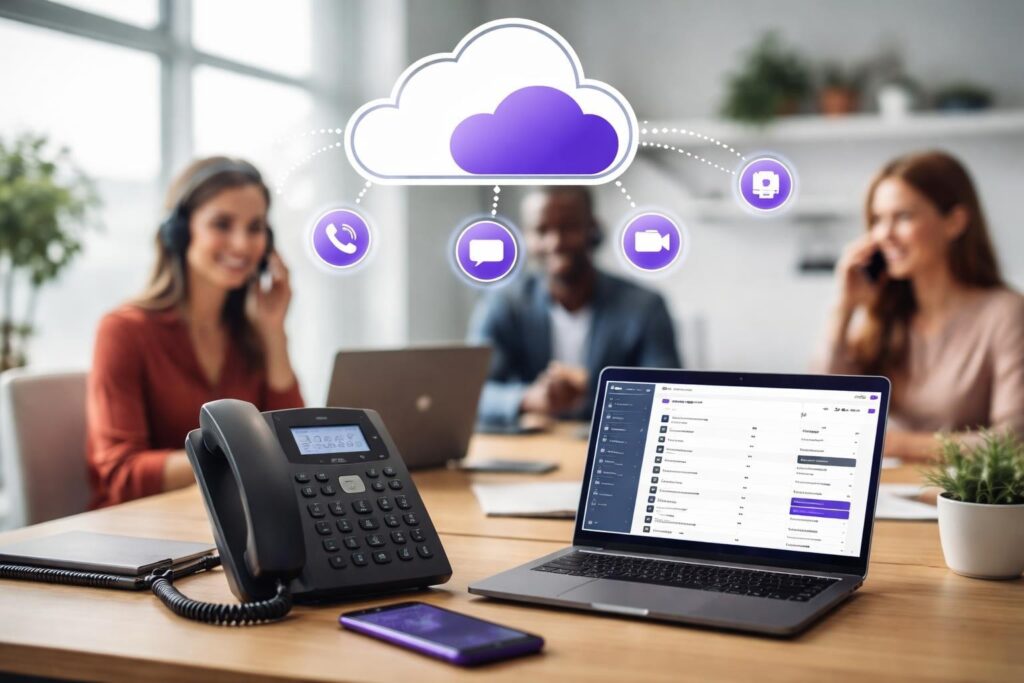
Irish SMBs are rapidly shifting away from traditional phone infrastructure towards internet-based communication solutions that offer greater flexibility and advanced functionality. Business cloud phone systems have emerged as the preferred choice for companies seeking to modernise their communications whilst reducing operational costs. These systems deliver enterprise-grade features through simple monthly subscriptions, eliminating the need for costly hardware installations and ongoing maintenance contracts. Understanding how these platforms work and what they offer helps businesses make informed decisions about their telephony infrastructure.
Understanding Cloud-Based Telephony Architecture
Business cloud phone systems operate entirely over the internet, routing calls through secure data centres rather than traditional copper telephone lines. This fundamental shift in infrastructure brings numerous advantages for growing companies.
Key Technical Components
The architecture comprises several interconnected elements working together seamlessly. Voice data converts into digital packets that travel across internet connections, whilst sophisticated software manages call routing, queuing, and distribution. Users access the system through various devices including desk phones, computers, and mobile applications.
Moving towards cloud-based solutions represents a significant technological advancement for businesses accustomed to traditional systems. The transition eliminates physical phone exchanges and enables complete location independence.

Essential Features for Irish Businesses
Modern business phone systems deliver functionality that extends far beyond basic calling capabilities. Irish SMBs particularly benefit from features designed to enhance customer service and operational efficiency.
Core Communication Features:
- Smart call routing directing inquiries to appropriate team members
- Voicemail transcription delivering messages as readable text
- Call recording for quality assurance and training purposes
- Conference calling supporting multiple participants simultaneously
- Omnichannel messaging consolidating communications across platforms
AI-Powered Capabilities
Artificial intelligence integration represents the latest evolution in business cloud phone systems. AI call handling automates routine inquiries, provides intelligent call screening, and delivers valuable insights from conversation analysis. These capabilities free staff to focus on complex customer interactions whilst ensuring consistent service quality.
The after-hours call handling functionality proves particularly valuable for businesses serving customers across multiple time zones or operating outside traditional office hours.
Comparing Cloud and Traditional Systems
| Feature | Cloud Systems | Traditional Systems |
|---|---|---|
| Initial Investment | Low (subscription-based) | High (hardware purchase) |
| Scalability | Instant user addition | Requires hardware upgrades |
| Maintenance | Provider-managed | In-house responsibility |
| Remote Working | Fully supported | Limited or impossible |
| Feature Updates | Automatic | Manual installation required |
Understanding the differences between cloud-based and on-premises systems helps businesses evaluate which approach suits their operational requirements and growth plans. The flexibility of cloud solutions proves particularly advantageous for companies with distributed teams or seasonal staffing variations.
Implementation Strategies for SMBs
Successful deployment of business cloud phone systems requires careful planning and consideration of specific business requirements. Irish companies should evaluate their unique communication patterns before selecting a platform.
Planning Your Migration
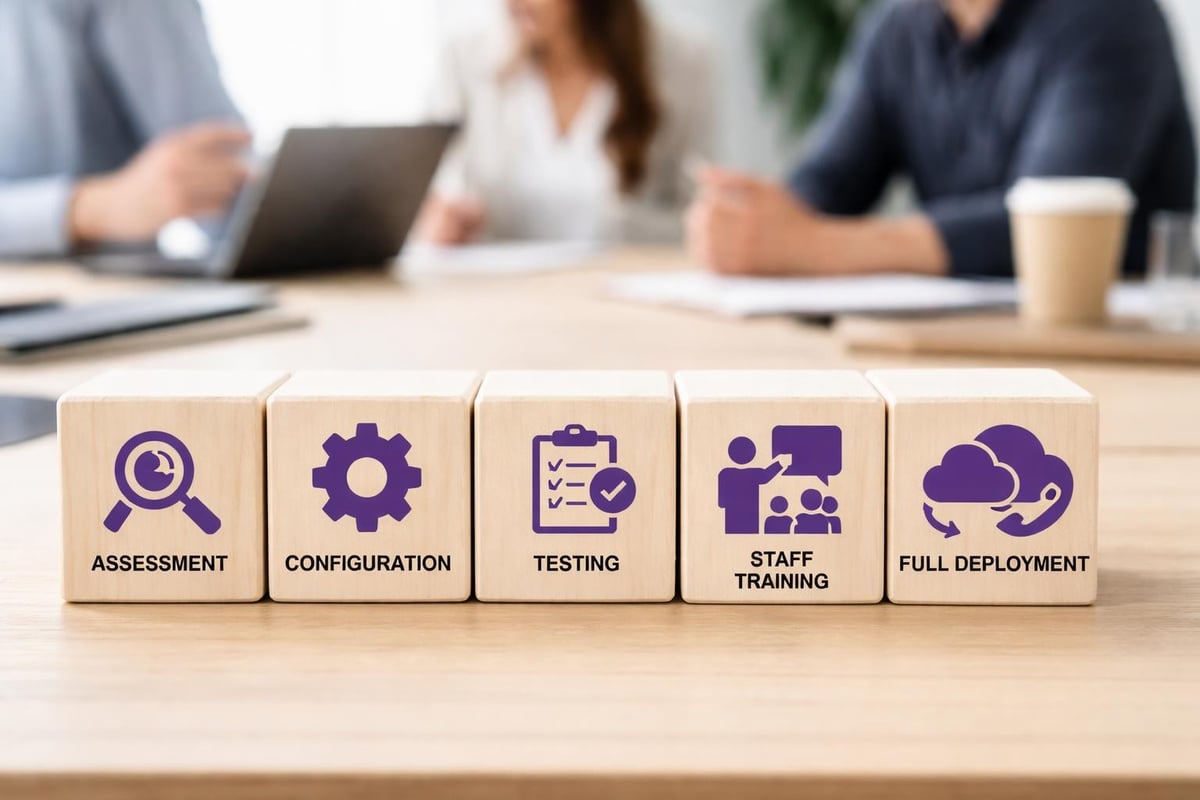
Begin by assessing current call volumes, peak usage periods, and existing workflows. Document which features matter most to your team and identify any integration requirements with existing business software.
Critical Implementation Steps:
- Audit existing phone numbers and determine which to port
- Evaluate internet bandwidth and connection reliability
- Select appropriate hardware or confirm BYOD compatibility
- Configure call routing rules and user permissions
- Train staff on new features and mobile applications
- Test extensively before full deployment
Migrating to modern cloud telephony typically completes within days rather than weeks, minimising disruption to daily operations. Number portability ensures customers continue reaching your business using familiar contact details.
Industry-Specific Applications
Different sectors benefit from tailored approaches to business cloud phone systems. The versatility of modern platforms enables customisation for specific operational requirements.
Professional Services
Law firms, accountancies, and consultancies require sophisticated call handling with robust security features. Integration with client management systems streamlines workflows whilst maintaining confidentiality. Professional services firms particularly value call recording for compliance and detailed reporting for billing purposes.
Hospitality and Retail
Restaurants and hotels need reliable systems that handle high call volumes during peak periods. Restaurant phone systems benefit from features like automated reservation confirmation and intelligent call queuing that reduces abandoned calls during busy service periods.
Construction and Real Estate
Field-based industries require mobile-first solutions enabling seamless communication regardless of physical location. Real estate professionals and construction teams rely on mobile applications that deliver desk phone functionality whilst on site visits or property viewings.
Integration Capabilities
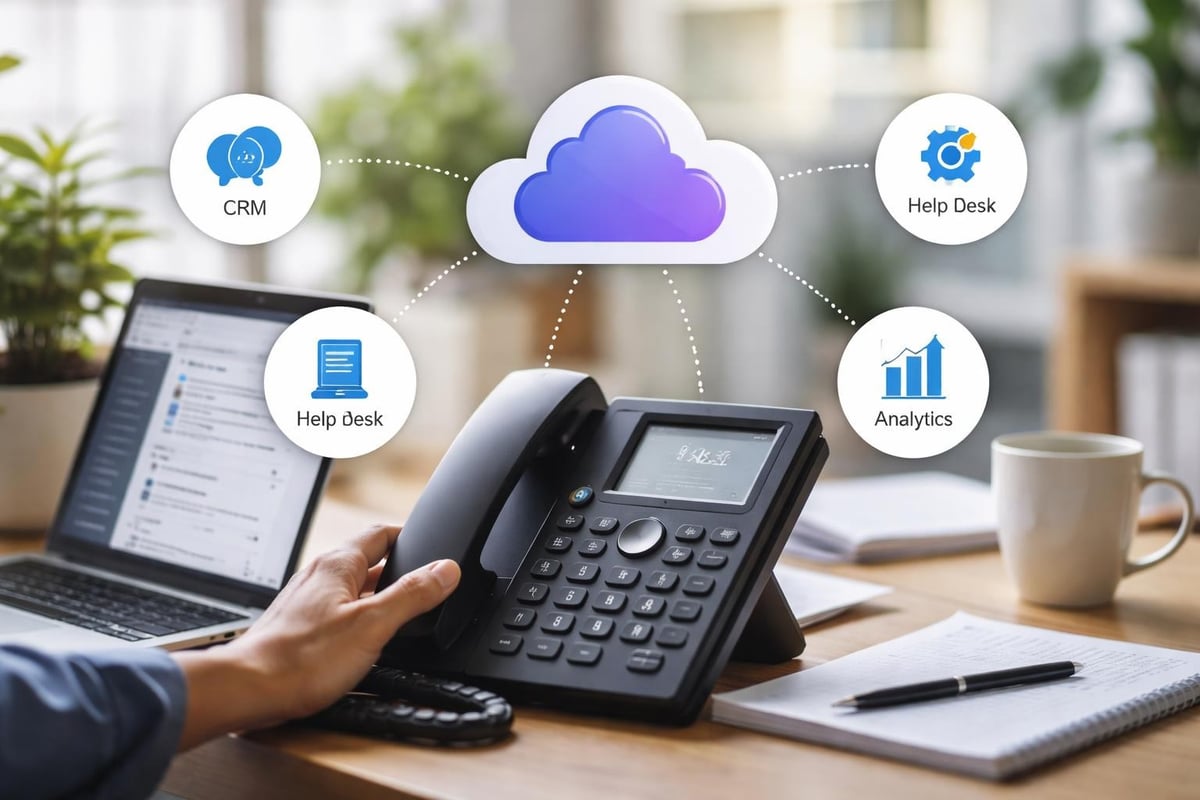
Business cloud phone systems achieve maximum value when connected to existing business applications. Modern platforms offer extensive integration options that eliminate data silos and streamline workflows.
| Integration Type | Business Benefit | Common Applications |
|---|---|---|
| CRM Systems | Automatic call logging, contact information display | Salesforce, HubSpot, Zoho |
| Help Desk Software | Ticket creation from calls, customer history access | Zendesk, Freshdesk |
| Collaboration Tools | Unified communications, presence indicators | Microsoft Teams, Slack |
| Analytics Platforms | Comprehensive reporting, performance dashboards | Google Analytics, Tableau |
Salesforce integration enables sales teams to view customer information automatically when calls arrive, whilst Zendesk integration creates support tickets directly from phone conversations. These connections eliminate manual data entry and ensure information accuracy across platforms.
Security and Reliability Considerations
Businesses naturally question whether cloud-based phone systems deliver the reliability expected from critical communications infrastructure. Modern providers implement multiple redundancy layers and robust security protocols.
Security Measures:
- End-to-end encryption protecting call content and data
- Multi-factor authentication preventing unauthorised access
- Regular security audits and compliance certifications
- Distributed data centres ensuring service continuity
- Automated backup systems protecting configuration data
Reputable providers maintain uptime guarantees exceeding 99.9%, often surpassing traditional telephone network reliability. Geographic redundancy ensures service continues even during localised internet disruptions.
Cost Analysis and ROI
Financial considerations drive many businesses towards business cloud phone systems. The subscription model transforms telecommunications from capital expenditure to predictable operational costs.
Traditional systems require substantial upfront hardware purchases, installation fees, and ongoing maintenance contracts. Cloud solutions eliminate these expenses, offering transparent monthly pricing that scales with user count. Additional savings emerge from reduced energy consumption, eliminated equipment upgrades, and decreased support requirements.
Irish SMBs typically achieve return on investment within six to twelve months through reduced telephony costs, improved staff productivity, and enhanced customer service capabilities. Understanding cloud phone system economics helps businesses calculate potential savings accurately.
Selecting the Right Provider
Choosing appropriate cloud-based phone services requires evaluating multiple factors beyond basic feature lists. Consider provider track record, customer support quality, and long-term viability.
Evaluation Criteria:
- Geographic coverage and local number availability
- Quality of customer support and response times
- Transparent pricing without hidden fees
- User interface simplicity and mobile application quality
- Integration ecosystem and API availability
- Contract flexibility and cancellation terms
Request demonstrations focusing on your specific use cases rather than generic feature tours. Test mobile applications extensively, as remote working capabilities often determine system effectiveness.
Business cloud phone systems deliver transformative communication capabilities that help Irish SMBs compete effectively whilst controlling costs. The combination of advanced features, integration flexibility, and scalable infrastructure makes these platforms ideal for growing companies. Dromlik Ireland provides modern telephony solutions tailored specifically for Irish businesses, featuring AI-powered call handling, smart routing, and seamless integrations that simplify communications whilst enhancing customer service.