
Modern business communications demand more than simply answering calls. Irish SMBs increasingly recognise that how calls reach the right person matters just as much as answering promptly. Telephone routing forms the backbone of professional customer service, ensuring callers connect with appropriate team members without frustration or delay. This systematic approach to call management transforms chaotic phone systems into streamlined communication channels that enhance customer satisfaction whilst improving operational efficiency.
Understanding Telephone Routing Fundamentals
Telephone routing represents the automated process of directing incoming calls to appropriate destinations based on predefined rules and conditions. Rather than relying on manual transfers or guesswork, sophisticated routing systems analyse call characteristics and apply logic to determine optimal pathways.
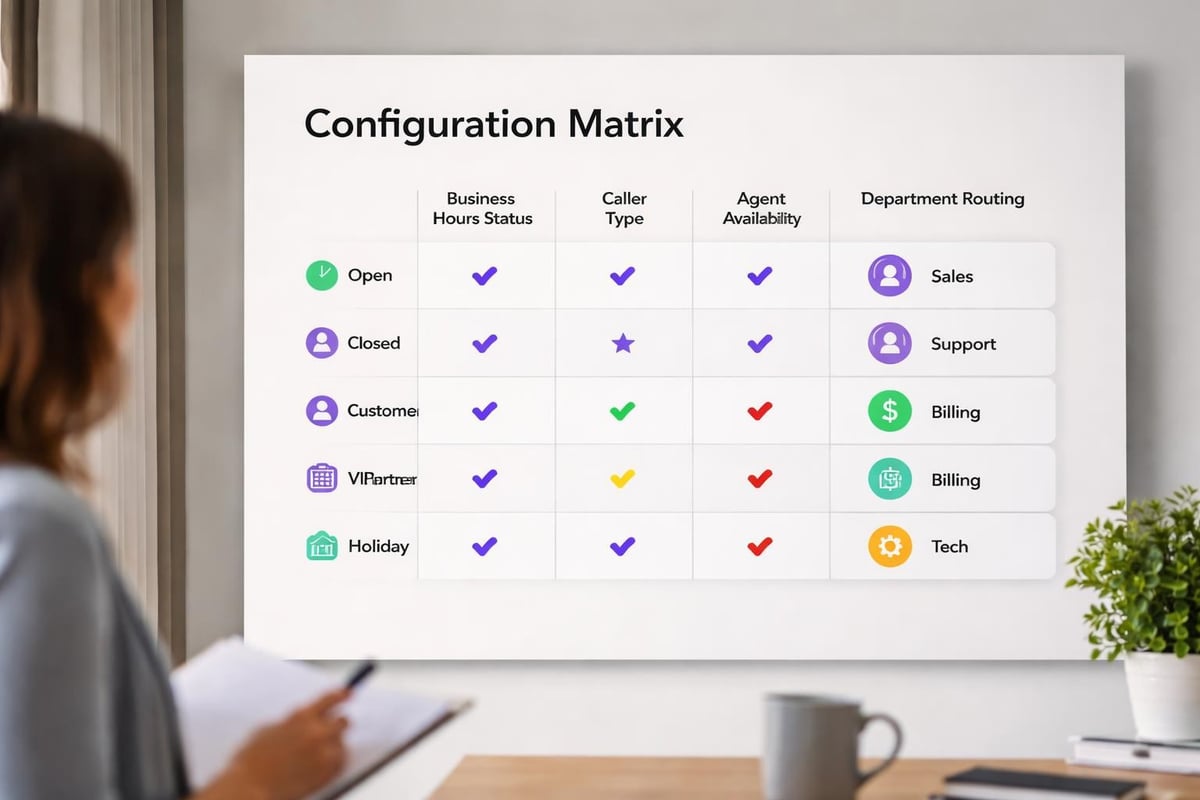
The technology leverages automatic route selection principles, examining factors such as caller identity, time of day, agent availability, and departmental requirements. Each incoming call triggers a decision tree that evaluates these variables within milliseconds, creating seamless experiences for customers whilst maximising resource utilisation.
Core Components of Routing Systems
Effective telephone routing relies on several interconnected elements working in harmony:
- Caller identification: Systems recognise incoming numbers and match them against customer databases
- Time-based rules: Routing patterns adjust automatically based on business hours, holidays, and peak periods
- Skill-based distribution: Calls reach team members with appropriate expertise for specific enquiry types
- Queue management: Systems prioritise callers and distribute load across available agents
- Fallback protocols: Alternative routing paths activate when primary destinations become unavailable
Modern business phone systems integrate these components within unified platforms, eliminating the complexity traditionally associated with enterprise telephony.

Routing Types and Strategies
Different business scenarios demand specific routing approaches. Understanding available options enables organisations to select strategies aligned with operational requirements and customer expectations.
| Routing Type | Primary Use Case | Key Benefit |
|---|---|---|
| Sequential | Small teams with clear hierarchies | Simple implementation and predictable patterns |
| Simultaneous | Urgent enquiries requiring immediate response | Minimises wait times and missed opportunities |
| Skills-based | Technical support or specialised services | Matches expertise with customer needs |
| Time-based | Businesses with multiple shifts or locations | Adapts automatically to operational schedules |
| Geographic | Multi-location enterprises | Connects callers with nearest or most relevant office |
Location-based routing proves particularly valuable for businesses serving diverse regions, enabling Irish companies to route calls from Dublin differently than those from Cork or Galway.
Implementing Intelligent Call Distribution
The shift towards intelligent distribution represents a significant advancement in telephone routing capabilities. Rather than static rules, these systems continuously optimise based on real-time conditions.
AI-driven call handling analyses patterns, predicts caller intent, and adjusts routing dynamically. When a regular customer rings during a busy period, the system might prioritise their call or route them to their preferred representative automatically.
Geographic considerations extend beyond simple location matching. DNS-based routing methods demonstrate how network-level decisions influence call pathways, particularly for businesses operating cloud-based infrastructures across multiple data centres.
Advanced Routing Considerations
Sophisticated telephone routing extends beyond basic call direction. Modern implementations incorporate features that transform phone systems into comprehensive communication platforms.
Integration with Business Tools
Routing decisions gain significant value when connected to broader business systems. CRM integration enables systems to identify callers instantly, retrieve account histories, and route based on customer value or outstanding issues.
- CRM data enrichment: Systems access customer records before routing occurs
- Workflow automation: Calls trigger appropriate business processes automatically
- Analytics integration: Routing decisions generate actionable insights for continuous improvement
- Omnichannel coordination: Voice routing aligns with digital channel management
Businesses leveraging Salesforce integration or HubSpot integration experience particularly powerful routing capabilities, as comprehensive customer data informs every routing decision.
After-Hours and Overflow Management
Effective telephone routing addresses scenarios beyond standard operating hours. After-hours call handling requires distinct strategies that maintain professionalism whilst managing resource constraints.
Overflow protocols activate when primary teams reach capacity. Rather than forcing callers into endless queues, intelligent routing redirects calls to alternative resources, voicemail systems, or callback arrangements.
The telephony cloud infrastructure supporting modern routing systems enables businesses to scale resources dynamically, activating additional capacity during unexpected demand spikes without manual intervention.
Technical Infrastructure and Standards
Reliable telephone routing demands robust technical foundations. Understanding underlying infrastructure helps businesses make informed decisions about system selection and implementation.
Routing administration platforms manage the complex data required for accurate call direction, including numbering assignments, carrier selections, and billing information. These centralised systems ensure consistency across telecommunications networks.
Number Portability Considerations
When customers switch providers whilst retaining phone numbers, routing systems must adapt accordingly. Number portability configurations ensure calls reach correct destinations despite underlying provider changes.
For Irish businesses, maintaining routing accuracy during provider transitions proves essential. Migration to modern systems requires careful planning to preserve routing rules and customer experiences throughout transition periods.
DNS-level routing employs sophisticated mechanisms including NAPTR records for SIP-based telephony, enabling complex URI mapping and protocol selection. These technical standards ensure interoperability across diverse telecommunications infrastructure.
Key performance indicators for telephone routing effectiveness including call answer time, routing accuracy percentage, customer satisfaction scores, and agent utilization rates tracked over monthly periods
Optimising Routing Performance
Implementing telephone routing represents merely the starting point. Continuous optimisation ensures systems deliver maximum value as business requirements evolve.
Analyse routing patterns regularly to identify bottlenecks and opportunities. Metrics worth monitoring include:
- Average routing time from call arrival to agent connection
- Percentage of calls reaching intended destinations on first attempt
- Caller satisfaction scores correlated with routing pathways
- Agent utilisation rates across different routing scenarios
- Peak period performance compared with baseline averages
Professional services firms often discover that skills-based routing dramatically improves client satisfaction, whilst restaurants benefit most from time-based routing that separates reservation enquiries from delivery orders.
Industry-Specific Applications
Different sectors require tailored telephone routing approaches. Real estate businesses might prioritise geographic routing to connect property enquiries with agents covering specific areas, whilst construction companies often implement project-based routing that directs calls to site managers handling particular developments.
Testing routing configurations before full deployment prevents disruptions. Implement changes incrementally, monitor outcomes carefully, and gather feedback from both customers and team members to refine approaches systematically.
Effective telephone routing transforms how Irish businesses manage communications, turning phone systems from simple call-answering tools into strategic assets that enhance customer experiences and operational efficiency. By implementing intelligent routing strategies tailored to specific business needs, organisations ensure every caller reaches the right destination quickly and professionally. Dromlik Ireland delivers sophisticated routing capabilities within an accessible platform designed specifically for Irish SMBs, combining AI-driven intelligence with intuitive configuration tools that make advanced telephone routing achievable for businesses of all sizes.