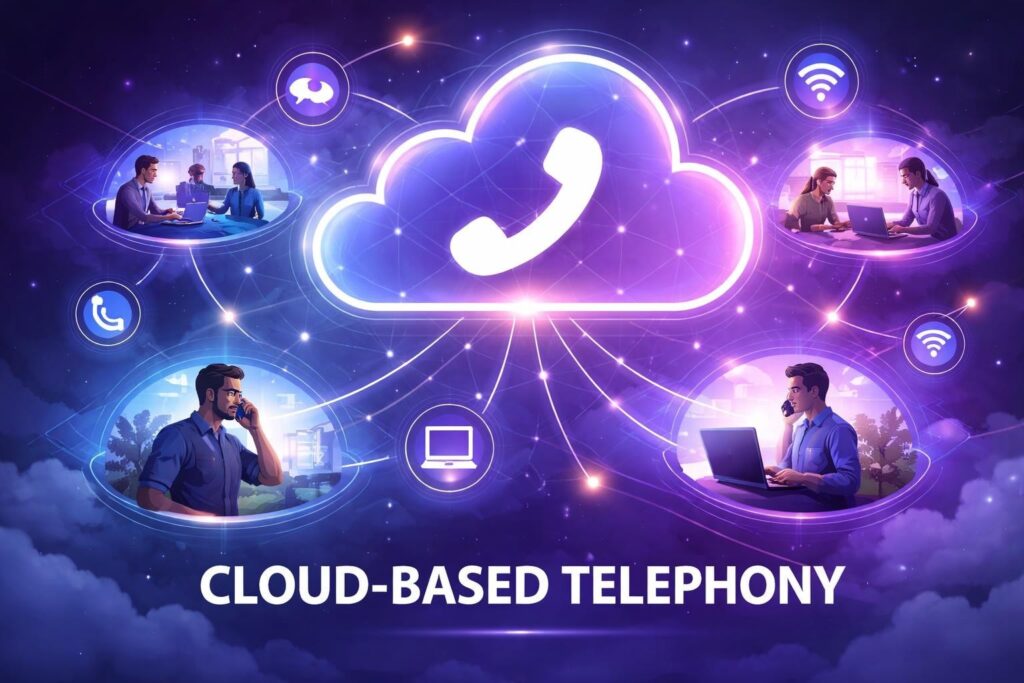
Modern Irish businesses face mounting pressure to deliver exceptional customer service whilst managing costs and adapting to hybrid work environments. Traditional phone systems with their hefty upfront investments and inflexible infrastructure no longer meet these evolving demands. Cloud based telephony emerges as the solution, delivering enterprise-grade communication capabilities through the internet without the burden of physical hardware or complex maintenance requirements.
Understanding Cloud Based Telephony Infrastructure
Cloud based telephony operates by routing voice calls over internet connections rather than traditional copper telephone lines. Service providers host all telephony equipment and software in secure data centres, delivering phone system functionality to businesses as a subscription service.
This fundamental shift transforms capital expenditure into predictable operational costs. Instead of purchasing expensive PBX hardware, businesses access sophisticated phone systems through monthly subscriptions.
Core Components and Architecture
The technology relies on several integrated elements working seamlessly together:
- VoIP protocols that convert voice into digital data packets
- Cloud servers hosted in redundant data centres
- Internet connectivity providing the communication pathway
- Endpoint devices including desk phones, softphones, or mobile applications
- Management interfaces for configuration and monitoring
Understanding cloud communications reveals how these components create a robust, scalable infrastructure that adapts to business needs. Irish SMBs particularly benefit from this flexibility as they expand operations or adjust to seasonal fluctuations.
Business Advantages for Irish SMBs
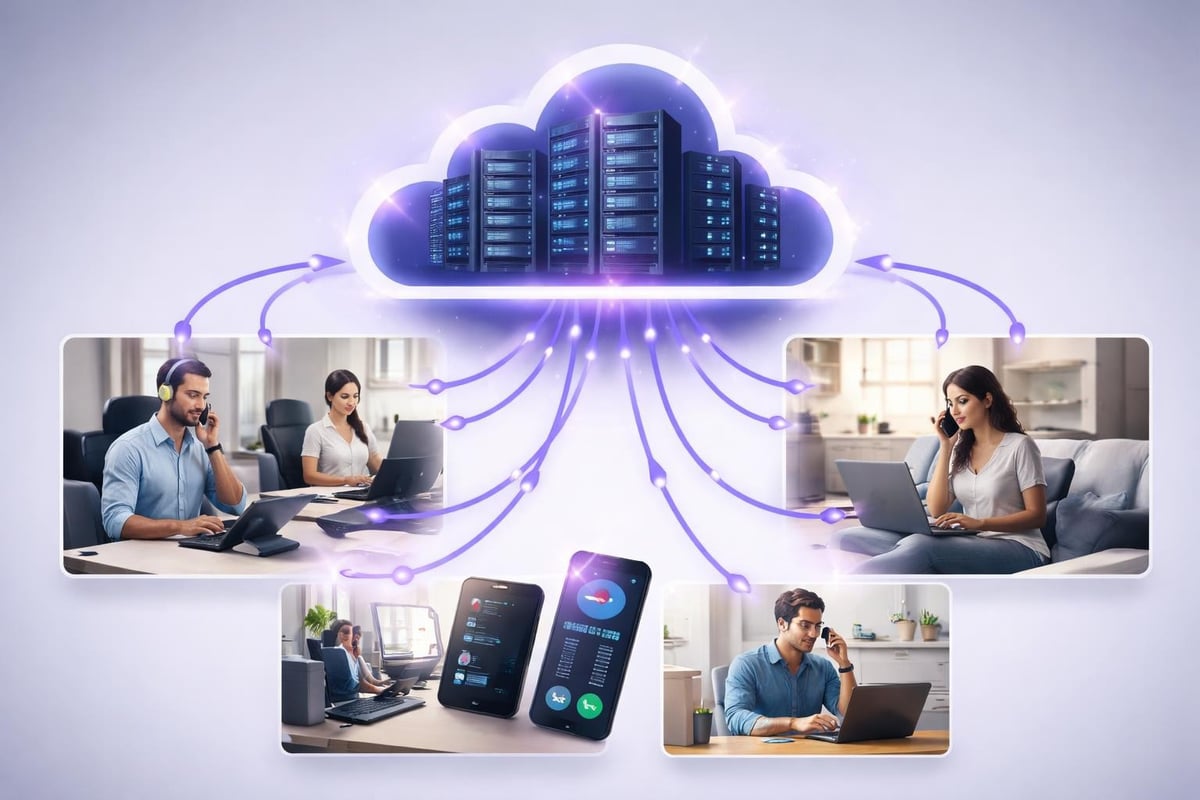
Cloud based telephony delivers tangible benefits that directly impact operational efficiency and customer satisfaction. Cost reduction represents the most immediate advantage, with businesses eliminating hardware purchases, maintenance contracts, and upgrade expenses.
| Traditional Telephony | Cloud Based Telephony |
|---|---|
| High upfront capital costs | Low monthly subscription |
| On-site hardware maintenance | Provider-managed infrastructure |
| Limited scalability | Instant user additions |
| Fixed location dependency | Work from anywhere capability |
| Manual updates required | Automatic feature updates |
Scalability transforms business agility. Adding new users takes minutes rather than weeks, allowing companies to respond instantly to growth opportunities or temporary staffing needs. A modern business phone system can expand from five users to fifty without infrastructure changes.
Geographic flexibility enables truly distributed teams. Employees maintain professional business numbers whether working from Dublin headquarters, home offices in Cork, or client sites across Ireland. This mobility proved invaluable during recent workplace transformations.
Advanced Features Driving Productivity
Modern cloud platforms incorporate sophisticated capabilities once reserved for enterprise organisations:
- Intelligent call routing directing customers to appropriate departments automatically
- Voicemail-to-email transcription ensuring messages never go unnoticed
- Call analytics and reporting revealing patterns and performance metrics
- Multi-channel integration combining voice, SMS, and messaging platforms
- CRM connectivity displaying customer information during incoming calls
An AI receptionist exemplifies how artificial intelligence enhances telephony. These systems handle routine enquiries, route calls intelligently, and provide 24/7 availability without human intervention. Irish businesses leverage this technology to maintain professional customer service whilst controlling staffing costs.
Implementation Considerations for Irish Businesses
Transitioning to cloud based telephony requires thoughtful planning despite its straightforward deployment. Internet connectivity forms the foundation of reliable service, making bandwidth assessment crucial before implementation.
Minimum requirements typically include:
- 100 kbps upload and download speed per concurrent call
- Quality of Service (QoS) configuration prioritising voice traffic
- Redundant internet connections for business-critical operations
- Network equipment supporting VoIP protocols
Number portability ensures businesses retain existing phone numbers during migration. Irish regulations mandate that carriers facilitate this process, preserving established customer contact points and marketing materials.
Security and Compliance Standards
Cloud telephony providers implement multiple security layers protecting business communications. Encryption safeguards call content during transmission, whilst secure authentication prevents unauthorised system access.

For businesses handling sensitive information, understanding detailed security frameworks becomes essential. GDPR compliance requires particular attention in Ireland, with providers offering data residency guarantees and transparent processing agreements.
Regular security updates arrive automatically with cloud services, eliminating the vulnerability windows that plague on-premise systems requiring manual patching.
Integration Capabilities and Ecosystem
Cloud based telephony's true power emerges through integration with existing business tools. Connecting with CRM platforms transforms customer interactions by surfacing relevant information during calls, enabling personalised service without manual lookups.
Popular integration options include:
- Customer relationship management systems displaying contact histories
- Help desk software automatically creating tickets from calls
- Team collaboration platforms like Microsoft Teams integration
- Business intelligence tools aggregating communication metrics
- Workflow automation triggering actions based on call events
These connections eliminate data silos and manual data entry, improving accuracy whilst reducing administrative burden. A property management firm might automatically log tenant calls in their system, whilst a professional services practice creates project time entries from client consultations.
Operational Efficiency Through Analytics
Cloud platforms generate comprehensive data about communication patterns and performance. Call volume trends, peak hour identification, and response time metrics inform staffing decisions and process improvements.
Key performance indicators available include:
| Metric | Business Value |
|---|---|
| Average handling time | Efficiency measurement |
| First call resolution | Service quality indicator |
| Abandoned call rate | Capacity planning signal |
| Queue wait times | Customer experience metric |
| Agent utilisation | Resource optimisation data |
Professional services firms particularly benefit from these insights, identifying billable time opportunities and client communication patterns. Restaurant operations optimise phone systems for peak reservation periods, ensuring adequate coverage during busy hours.

Cost Structure and Return on Investment
Understanding the financial model helps businesses evaluate cloud based telephony against traditional alternatives. Subscription pricing typically includes the core platform, standard features, and support services, with add-ons available for advanced capabilities.
Monthly costs per user generally range from €15 to €40 depending on feature requirements and service levels. This predictability simplifies budgeting and eliminates surprise maintenance expenses or emergency repair costs.
Total cost of ownership calculations should consider:
- Eliminated hardware purchase and installation costs
- Reduced IT support requirements and maintenance contracts
- Lower energy consumption without on-premise equipment
- Decreased telecommunication charges through internet calling
- Productivity gains from advanced features and integrations
Most Irish SMBs achieve positive ROI within twelve months, primarily through reduced telecommunication expenses and improved operational efficiency. Migrating to modern cloud systems often reveals hidden costs in legacy infrastructure that businesses had normalised.
Future-Proofing Business Communications
Technology evolution continues accelerating, with artificial intelligence and automation reshaping customer expectations. Cloud based telephony platforms adapt to these changes through regular feature updates, ensuring businesses access cutting-edge capabilities without system replacements.
Emerging developments include enhanced natural language processing for customer interactions, predictive analytics forecasting call volumes, and deeper integration with business intelligence platforms. AI-powered phone answering systems already handle routine enquiries with remarkable sophistication, freeing human staff for complex customer needs.
The shift toward unified communications platforms combines voice, video, messaging, and collaboration tools in single solutions. This convergence simplifies management whilst delivering seamless user experiences across communication channels.
Cloud based telephony fundamentally transforms how Irish businesses communicate, delivering enterprise capabilities with SMB-friendly pricing and simplicity. The combination of cost savings, operational flexibility, and advanced features positions it as essential infrastructure for competitive organisations. Dromlik Ireland provides Irish SMBs with a modern, AI-enhanced phone system that simplifies business communications whilst improving customer service through intelligent call handling and omnichannel messaging capabilities.