The way Irish businesses communicate has fundamentally changed. Traditional landline systems, once the backbone of business telephony, are giving way to more flexible, cost-effective solutions. Cloud phone systems represent this evolution, offering companies of all sizes the ability to manage calls, messages, and customer interactions through internet-based platforms. For Irish SMBs particularly, understanding this technology is essential to remaining competitive and meeting modern customer expectations.
Understanding Cloud-Based Telephony
Cloud phone systems operate fundamentally differently from traditional premises-based equipment. Rather than requiring physical hardware installed at your office location, these solutions host all telephony infrastructure in secure data centres. Your team accesses the system through internet connections, using desk phones, computers, or mobile devices.
This architecture delivers several immediate advantages. Scalability becomes straightforward, as adding new users typically requires just a few clicks rather than expensive hardware installations. Maintenance shifts from your responsibility to your provider's technical team. Geographic flexibility means your staff can work from anywhere whilst maintaining professional business communications.

Cloud communications have matured significantly since their introduction. Early concerns about call quality and reliability have largely been addressed through improved internet infrastructure and advanced codec technology. Irish businesses now benefit from systems that match or exceed traditional line quality whilst offering considerably more functionality.
Key Features Driving Business Adoption
Modern cloud phone systems deliver capabilities that would have required substantial investment in legacy systems. Understanding these features helps businesses identify which solutions best serve their needs.
Smart Call Management
- Intelligent routing directs calls to the right person or department based on time, caller identity, or menu selections
- Queue management ensures callers receive appropriate hold music and position updates
- Overflow handling redirects calls when lines are busy or during peak periods
- Call recording provides quality assurance and training opportunities
Integration Capabilities
Today's businesses use multiple software platforms. Business phone systems that integrate with CRM tools, helpdesk software, and collaboration platforms eliminate data silos and streamline workflows. When a customer calls, representatives immediately see their history, previous interactions, and account status.
Popular integrations include:
| Platform Type | Business Benefit | Common Use Cases |
|---|---|---|
| CRM Systems | Automatic logging of calls and contact details | Sales teams, account management |
| Helpdesk Tools | Ticket creation from phone interactions | Customer support, IT services |
| Collaboration Software | Unified communications across channels | Remote teams, project coordination |
| E-commerce Platforms | Order information during customer calls | Retail, distribution businesses |
AI-Powered Enhancements
Artificial intelligence is transforming business telephony. AI call handling can manage routine enquiries, route callers efficiently, and even provide after-hours support. For Irish SMBs with limited staff, these capabilities extend service hours without proportional cost increases.
Sentiment analysis helps identify frustrated callers who need immediate attention. Transcription services convert voicemails to text, making message management more efficient. Analytics reveal call patterns, helping businesses optimise staffing and identify training needs.
Comparing Cloud and On-Premises Solutions
The decision between cloud-based and traditional systems depends on specific business requirements. Understanding the differences helps companies make informed investments.
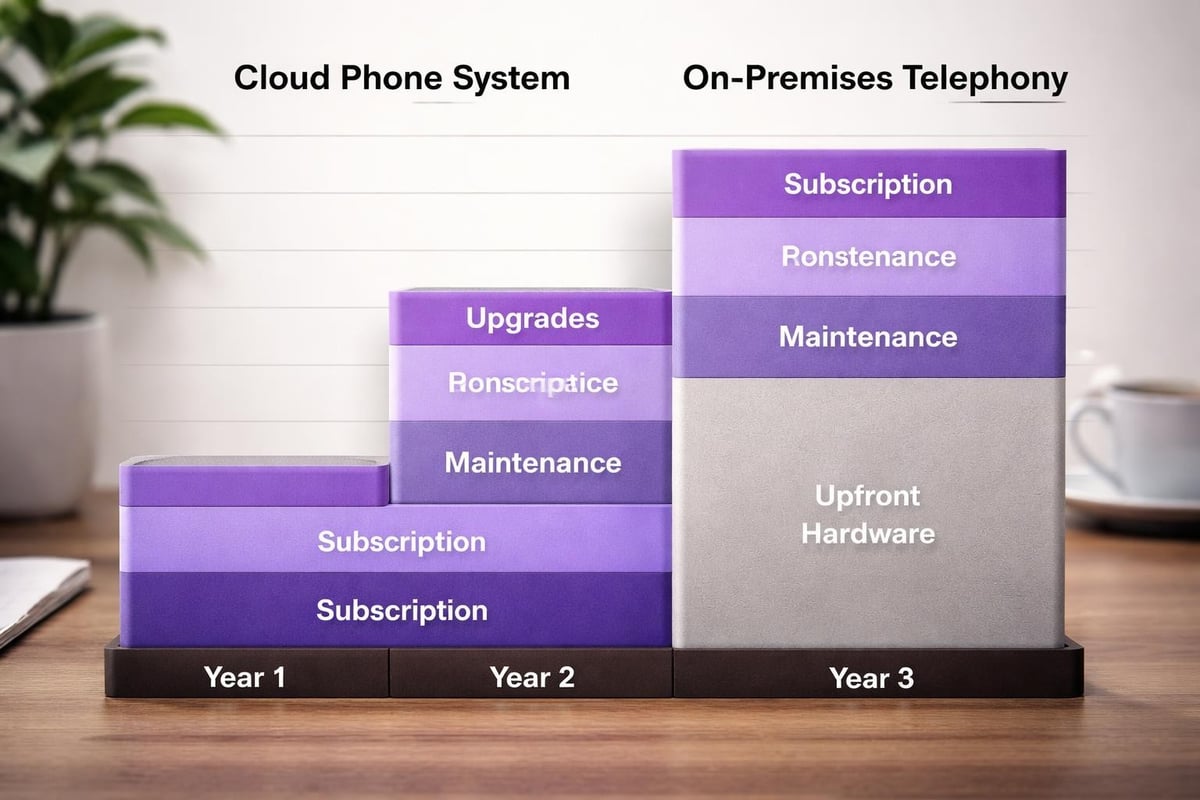
Initial Investment: Cloud solutions typically require minimal upfront expenditure. You pay subscription fees rather than purchasing hardware outright. On-premises systems demand significant capital investment in equipment, installation, and dedicated space.
Ongoing Costs: Traditional systems incur maintenance fees, upgrade expenses, and potential repair costs. Cloud providers include these elements in subscription pricing, making budgeting more predictable.
Flexibility: Cloud-based phone systems adapt quickly to changing business needs. Seasonal businesses can scale capacity up or down. Remote work becomes seamless. On-premises systems offer less flexibility, often requiring site visits for configuration changes.
Control: Some organisations prefer maintaining physical control over their telephony infrastructure. However, this control comes with responsibility for security updates, system monitoring, and disaster recovery planning.
Implementation Considerations for Irish Businesses
Successfully deploying cloud phone systems requires planning and preparation. Rushing implementation often leads to user frustration and underutilised features.
Internet Connectivity Assessment
Voice quality depends heavily on internet reliability and bandwidth. Each concurrent call requires approximately 100 kbps of bandwidth. Calculate your peak usage and ensure your connection provides adequate capacity with headroom for growth.
Redundancy matters tremendously. Consider backup internet connections to maintain service during provider outages. After-hours call handling becomes particularly important when internet disruptions occur outside normal support hours.
Number Portability
Most businesses want to retain existing phone numbers. Verify that your chosen provider supports number porting for Irish geographic and non-geographic numbers. The process typically takes 10-15 working days, so plan accordingly.
Staff Training Requirements
Even intuitive systems require training. Schedule dedicated time for employees to learn features like call transfers, conference calling, and voicemail management. Create quick-reference guides for common tasks.
Security and Compliance
Common misconceptions about cloud-based phones often centre on security concerns. Reputable providers implement robust security measures including encryption, regular security audits, and compliance certifications.
Data protection is particularly relevant for Irish businesses subject to GDPR requirements. Ensure your provider stores data within the EU and maintains appropriate data processing agreements. Call recordings and customer information require careful handling.
Reliability standards vary between providers. Look for service level agreements guaranteeing uptime percentages, typically 99.9% or higher. Understand what compensation you receive during outages and how quickly issues are resolved.
Industry-Specific Applications
Different sectors benefit from tailored telephony features. Restaurants need reservation management and table availability updates. Real estate agents require mobile flexibility and call forwarding to show properties whilst maintaining professional presence. Construction companies benefit from rugged mobile devices and job site communication tools.
Professional services firms increasingly adopt VoIP telephony services that integrate with billing systems, automatically logging client calls against matter codes. This integration improves time tracking accuracy and reduces administrative overhead.

Understanding your industry's specific requirements helps identify which features deliver the greatest value. Generic solutions may miss critical capabilities that sector-specific configurations provide.
Making the Transition
Migrating to cloud telephony requires careful planning but needn't disrupt operations. Most providers offer phased rollouts, allowing businesses to test systems with small user groups before company-wide deployment.
Parallel running provides additional security. Maintain your existing system whilst trialling the new platform, giving staff time to adapt and identifying any unforeseen issues. Once confidence builds, complete the transition.
Documentation proves invaluable. Record your current call flows, auto-attendant scripts, and routing rules. This information ensures your cloud system replicates existing functionality whilst adding new capabilities.
Cloud phone systems have matured into reliable, feature-rich solutions that address the evolving needs of modern Irish businesses. From cost savings and flexibility to advanced AI capabilities and seamless integrations, these platforms deliver tangible benefits across industries and company sizes. Dromlik Ireland provides Irish SMBs with professional business telephony featuring intelligent call handling, omnichannel messaging, and AI-driven insights that simplify communications whilst improving customer service. Discover how a modern phone system can transform your business communications.