
Modern businesses require communication systems that match the pace of today's dynamic work environment. A cloud based phone system delivers exactly that, replacing outdated hardware with flexible, internet-powered solutions that work anywhere your team operates. For Irish SMBs especially, this shift represents not just a technology upgrade but a fundamental transformation in how companies connect with customers and manage internal communications.
Understanding Cloud Telephony Technology
A cloud based phone system operates through Voice over Internet Protocol (VoIP), transmitting voice communications over your internet connection rather than traditional phone lines. This technology has matured significantly since its inception, now offering enterprise-grade reliability and feature sets that surpass legacy systems.
The architecture differs fundamentally from traditional PBX systems. Instead of installing physical hardware at your premises, your provider hosts all infrastructure in secure data centres. Your team accesses the system through desk phones, computers, or mobile devices, with all calls routing through the cloud.
How Cloud Systems Process Communications
When someone rings your business number, the call travels through the internet to your provider's servers. The system then applies your configured rules, perhaps checking the time of day, caller ID, or department availability before routing the call to the appropriate destination.
Key processing elements include:
- Call routing logic and intelligent distribution
- Voicemail transcription and storage
- Recording and archiving capabilities
- Integration with business applications
- Real-time analytics and reporting
This processing power enables features impossible with traditional phone systems, from AI-powered call handling to sophisticated customer relationship management integration.

Core Advantages for Business Operations
Implementing a cloud based phone system delivers measurable benefits across multiple operational areas. Understanding these advantages helps businesses make informed decisions about their communication infrastructure.
Flexibility and Remote Work Enablement
Your team can work from anywhere with internet access. Office, home, or coffee shop become equally viable workspaces when your phone system lives in the cloud. This flexibility proved essential during recent years and remains valuable as hybrid work models become standard.
Staff members maintain professional presence regardless of location. Customers ring the same number and receive identical service quality whether your team member answers from Dublin or Donegal.
Scalability Without Capital Expenditure
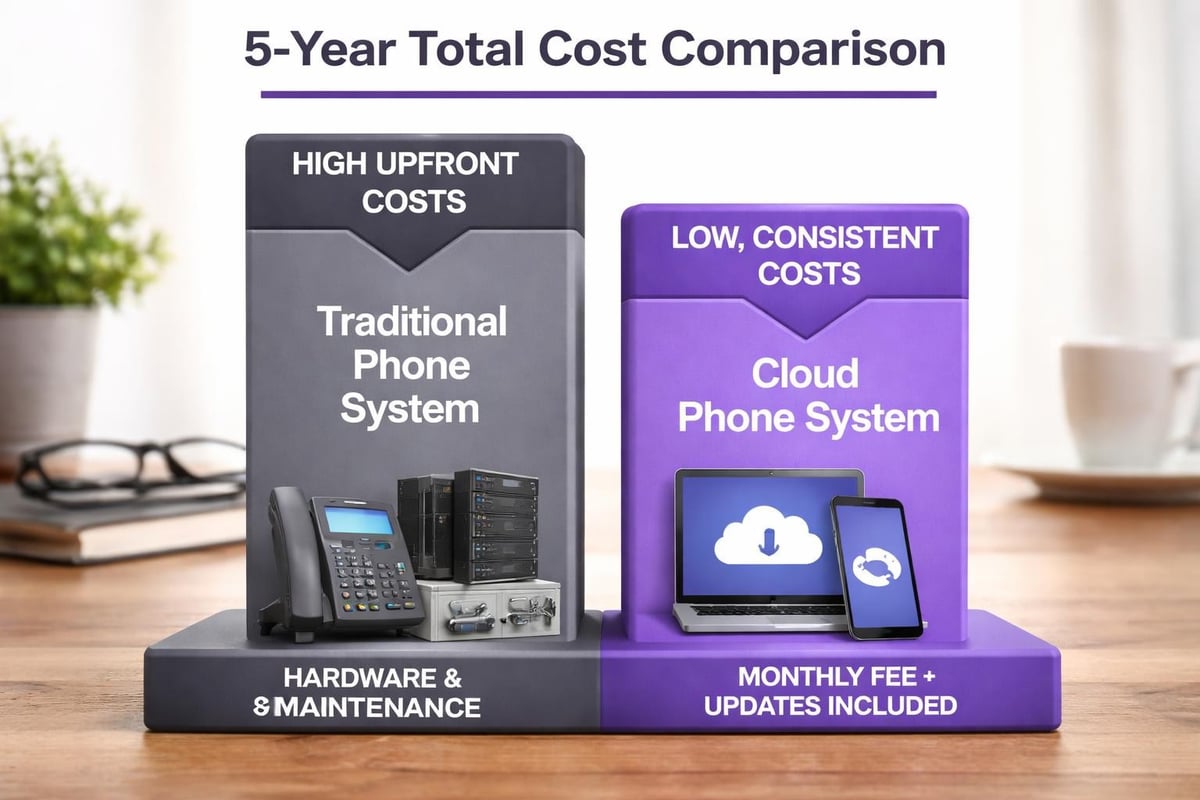
Traditional phone systems require significant upfront investment in hardware, with capacity limitations built into the physical equipment purchased. Cloud telephony operates on subscription models, allowing businesses to add or remove users monthly as needs change.
| Traditional System | Cloud Based System |
|---|---|
| High upfront costs | Predictable monthly fees |
| Limited to installed capacity | Unlimited scalability |
| Expensive upgrades | Automatic updates included |
| On-site maintenance required | Provider manages infrastructure |
| Geographic constraints | Work from anywhere |
Seasonal businesses particularly benefit from this flexibility, scaling up during busy periods and reducing costs during quieter months.
Advanced Features Transforming Customer Service
Modern cloud based phone system platforms offer capabilities that directly impact customer satisfaction and operational efficiency. These features transform how businesses manage communications.
Omnichannel Communication Integration
Customers expect to reach businesses through their preferred channels. Cloud systems unify voice calls, SMS, email, and social messaging into single interfaces. Staff members view complete conversation histories regardless of channel, maintaining context and delivering consistent service.
This integration eliminates the siloed communication that frustrates customers. Whether someone rings, texts, or messages on social media, your team accesses the same customer information and conversation history.
AI-Powered Call Management
Artificial intelligence capabilities have advanced significantly in 2026. Systems now offer intelligent call routing that considers caller history, predicted needs, and staff expertise. AI assistants can handle initial call screening, gather information, and route complex enquiries to appropriate team members.
AI features typically include:
- Natural language processing for caller intent recognition
- Predictive routing based on historical patterns
- Automated appointment scheduling
- Sentiment analysis during calls
- Real-time agent assistance and prompting
These capabilities allow small teams to deliver service levels previously requiring much larger staff complements.

Implementation Considerations for Irish Businesses
Transitioning to a cloud based phone system requires planning and understanding of potential challenges. While myths about reliability and security persist, proper implementation addresses these concerns effectively.
Internet Connectivity Requirements
Your internet connection becomes critical infrastructure. Most providers recommend minimum speeds of 100 kbps per concurrent call for acceptable quality, though higher speeds ensure better performance. Irish businesses benefit from improving broadband availability, though rural locations should carefully assess connectivity before committing.
Quality of Service (QoS) configuration on your network prioritizes voice traffic over less time-sensitive data. This technical setup, often handled during implementation, prevents call quality issues even when multiple applications compete for bandwidth.
Security and Compliance
Cloud telephony providers implement enterprise-grade security measures including encryption, secure data centres, and regular audits. When comparing cloud versus on-premises systems, security often favours cloud solutions where dedicated teams manage threats continuously.
For businesses handling sensitive customer data, verify that providers comply with GDPR requirements and maintain data centres within the European Union. This geographic consideration ensures data sovereignty and regulatory compliance.
Cost Structure and Financial Planning
Understanding the complete cost picture helps businesses evaluate cloud based phone system options accurately. Unlike traditional systems with hidden costs, cloud solutions offer transparency and predictability.
Monthly Operating Expenses
Typical pricing models charge per user monthly, with costs varying based on features required. Basic packages might include unlimited calling within Ireland and standard features, whilst premium tiers add advanced analytics, extended international calling, and AI capabilities.
- User licensing fees (typically €15-40 per user monthly)
- Phone hardware purchases or rentals
- Number porting and setup fees
- Optional premium features
- Integration costs with existing systems
Calculate total cost of ownership over three to five years, comparing against maintaining or upgrading existing infrastructure. Most businesses find cloud solutions reduce costs whilst improving capabilities.
Selecting the Right Solution Provider
Not all cloud based phone system providers serve Irish businesses equally well. Location matters for call quality, regulatory compliance, and support availability during Irish business hours.
Essential Provider Evaluation Criteria
Look beyond feature lists to practical considerations affecting daily operations. Does the provider offer Irish phone numbers? Can they port existing numbers smoothly? What level of support do they provide, and during which hours?
Critical assessment factors:
- Reliability metrics (aim for 99.9% uptime guarantees)
- Irish presence (local numbers and support)
- Integration capabilities with your current business tools
- Scalability options as your business grows
- Training and onboarding support quality
Request trials before committing. Testing systems with actual staff members reveals usability issues and compatibility concerns that specifications alone cannot predict.
Migration Planning and Staff Training
Successful implementation requires more than technical setup. Staff members need training on new features and workflows. Plan migration during quieter periods, allowing time for adjustment before peak seasons.
Consider phased rollouts, moving one department at a time. This approach allows learning from initial experiences and reduces risk of business disruption. Understanding the practical considerations helps set realistic expectations and timelines.
Future Developments in Cloud Communications
Cloud telephony continues evolving rapidly. Artificial intelligence integration deepens, offering increasingly sophisticated automation. Natural language processing improvements enable more natural interactions between customers and AI assistants.
Integration with business intelligence platforms provides actionable insights from communication patterns. These analytics reveal customer trends, staff performance metrics, and operational inefficiencies that warrant attention.
The boundary between telephony and comprehensive customer communication platforms blurs further. Modern systems unify all customer touchpoints, providing single views of relationships regardless of communication channel chosen.
A cloud based phone system represents more than technological advancement. It fundamentally improves how Irish businesses communicate internally and serve customers. The flexibility, scalability, and advanced features available through cloud platforms enable small and medium businesses to compete effectively whilst managing costs predictably. Dromlik Ireland provides modern business telephony specifically designed for Irish SMBs, featuring AI call handling, smart routing, and omnichannel messaging that simplifies communications whilst improving customer service. Explore how cloud telephony can transform your business operations today.